What is Google E-E-A-T ?
Introduction
What makes online content trustworthy?
When you search for something on Google, you expect the results to provide useful, accurate, and reliable information. Google therefore considers several aspects of content quality when evaluating webpages.
One important concept is E-E-A-T, which stands for Experience, Expertise, Authoritativeness, and Trustworthiness.
For businesses, bloggers, and digital marketers, understanding E-E-A-T can help create content that provides genuine value to users
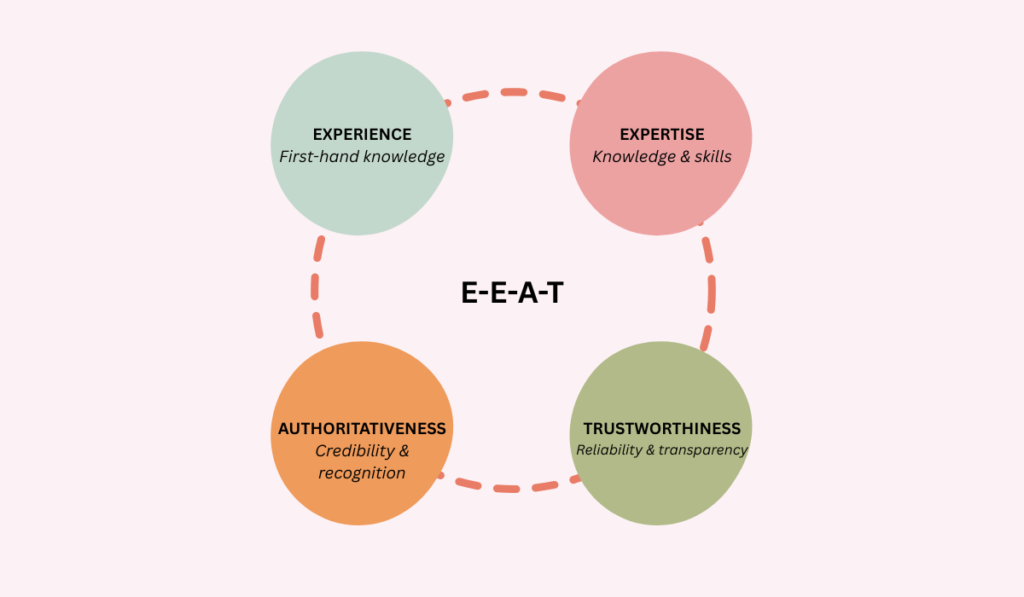
What Does Google E-E-A-T Mean?
E-E-A-T stands for Experience, Expertise, Authoritativeness, and Trustworthiness.
Each element represents a different aspect of high-quality content.
1. Experience
Experience refers to first-hand knowledge of a topic.
Content can be more useful when the creator has actually experienced the subject they are discussing.
For example, a travel blogger sharing their experience of visiting a destination can provide practical information based on what they personally experienced.
Similarly, a product review can be more useful when the writer has actually used the product.
How to demonstrate experience:
- Share first-hand experiences
- Include original photographs
- Provide real examples
- Share practical tips
- Explain personal results where relevant
2. Expertise
Expertise refers to the knowledge and skills demonstrated by the content creator.
Good content should provide accurate, useful, and well-explained information.
For topics that require professional knowledge, relevant qualifications or experience can further demonstrate expertise.
For example, an article about accounting written by someone with accounting knowledge can provide more specialized information than a general article based only on surface-level research.
How to demonstrate expertise:
- Provide accurate information
- Explain concepts clearly
- Use reliable sources
- Demonstrate relevant knowledge
- Keep information updated
3. Authoritativeness
Authoritativeness refers to the credibility of the website, content creator, or organization.
A website can establish authority by consistently publishing useful content and becoming recognized as a reliable source within its subject area.
Authority can be strengthened through:
- High-quality content
- Relevant backlinks
- Mentions from reputable websites
- Strong author profiles
- Reliable references
- Consistent knowledge in a specific topic
4. Trustworthiness
Trustworthiness is about whether users can rely on the website and its content.
A trustworthy website should make it clear who created the content and provide accurate and transparent information.
You can improve trust by including:
- Clear contact information
- An About page
- Author information
- Reliable sources
- Accurate information
- Secure website connections
- Clear policies where appropriate
E-E-A-T at a Glance
Now add a simple 4-column table in WordPress.
| E-E-A-T Element | What It Means | Example |
|---|---|---|
| Experience | First-hand knowledge | Personal product review |
| Expertise | Knowledge and skills | Professional guide |
| Authoritativeness | Recognition and credibility | Industry mentions |
| Trustworthiness | Reliability and transparency | Clear sources and author information |
Final Takeaway
E-E-A-T is an important concept for understanding content quality in Google’s search ecosystem.
Experience demonstrates first-hand knowledge.
Expertise demonstrates knowledge and skills.
Authoritativeness establishes credibility.
Trustworthiness helps users feel confident in the information they are reading.
Rather than trying to “optimize for E-E-A-T” as if it were a single ranking factor, focus on creating helpful, reliable, original, and people-first content.
When your content genuinely helps your audience, you are building more than SEO visibility — you are building credibility.